On this page
Our eyes are a unique pair of cameras that work in perfect synchronization and harmony, allowing us to perceive the world with depth, color, and reality. For the brain to create a single, clear, three-dimensional image, it is vital that both cameras focus on the same target. However, Strabismus (Eye Misalignment), which occurs due to an imbalance between the muscles that move the eyes, disrupts this harmony and deeply affects patients' quality of life both functionally and aesthetically.
Strabismus is not just a childhood problem; it is a medical condition that can appear at any age and must be treated. As Ophthalmology Specialist Ayşe Öner and her clinical team—highly experienced in strabismus (orthoptics) and surgery—we correct this loss of parallelism using the most advanced microsurgical methods and personalized treatment protocols.
What is Strabismus (Eye Misalignment)?
Under normal conditions, six external eye muscles manage both eyes with millimetric balance to focus on the same point. Strabismus is the loss of this parallelism due to neurological or anatomical imbalances between these muscles, causing the eyes to look in different directions. While one eye looks straight, the other may shift:
- Esotropia: Inward
- Exotropia: Outward
- Hypertropia: Upward
- Hypotropia: Downward
Strabismus is more than just an aesthetic concern; it is a functional disease that threatens the brain's visual perception. When eyes look in different directions, the brain receives two conflicting images. An adult brain cannot merge these, leading to double vision (diplopia). In children, the brain prevents double vision by ignoring (suppressing) the image from the misaligned eye, which results in permanent lazy eye (amblyopia).
Causes of Strabismus
Strabismus can be triggered by hereditary factors, refractive errors, or acquired neurological issues:
- Genetic Predisposition: Risk is significantly higher in children with a family history of strabismus or lazy eye.
- High Refractive Errors: The primary cause of inward shifting in children is untreated high hyperopia. The eye over-accommodates to see clearly, forcing the eyes to turn inward (Accommodative Esotropia).
- Neurological Factors: Difficult births, Cerebral Palsy, or childhood seizures can damage the nerves controlling eye muscles.
- Adult Onset Factors: In adults, sudden strabismus is often caused by head trauma, diabetes, hypertension-related nerve palsy (e.g., 6th nerve palsy), or thyroid (Goiter) diseases.
Diagnosis and Advanced Orthoptic Evaluation
Accurate treatment is only possible through a detailed evaluation. At Dr. Ayşe Öner Clinic, we use international diagnostic standards:
- Prismatic Cover Tests: Using special prism lenses, the exact degree (angle) of the shift is measured for both distance and near vision. Surgical planning is based on these precise measurements.
- Detailed Refraction: Especially in children, pupils are dilated with drops to detect hidden hyperopia or astigmatism.
- Fundus and Neurological Examination: Comprehensive scans check for cataracts, retinal tumors, or underlying neurological conditions that might cause the shift.
Treatment Methods: Holistic and Personalized Solutions
The goal is to regain three-dimensional depth perception and prevent lazy eye. Surgery is not always the first step:
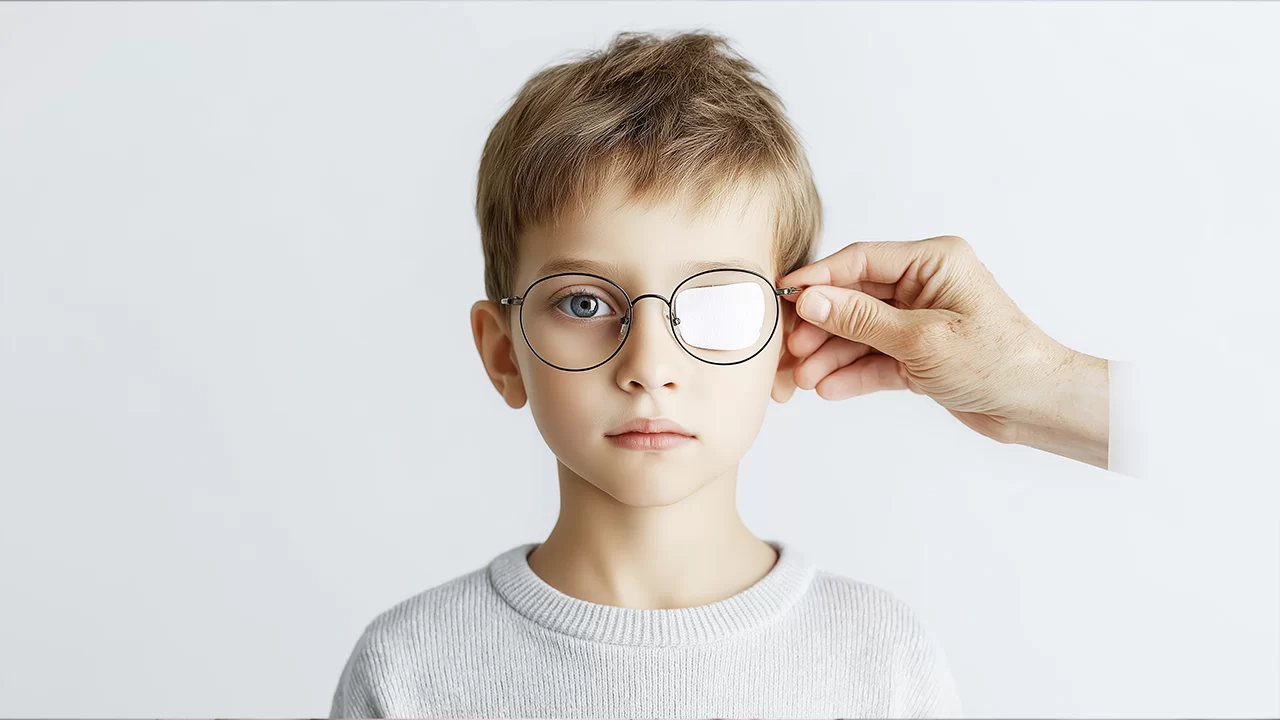
- Glasses and Patching (Orthoptic Treatment): In cases caused by hyperopia, full-prescription glasses can fully correct the alignment. If lazy eye is present, the strong eye is patched for specific hours to strengthen the misaligned eye.
- Botulinum Toxin (Botox) Injection: Effective for sudden nerve palsy in adults. Botox is injected into the overactive muscle to temporarily paralyze it, allowing the opposing muscle to pull the eye back to the center.
- Strabismus Surgery: For shifts that do not improve with glasses, surgery is the definitive solution. Performed under general or local anesthesia in our JCI-accredited hospitals, this is not a laser or intraocular surgery. The surgeon accesses the muscles on the white of the eye to either recess (weaken by moving it back) or resect (strengthen by shortening) the muscle. The mechanical balance is restored without any damage to the eyeball itself.
Frequently asked questions
Is strabismus only seen in children, or can it be treated in adults as well?
Strabismus is not exclusive to childhood; it can appear suddenly in adults due to unresolved childhood issues, head trauma, diabetes, neurological disorders, or systemic conditions like thyroid disease (Goiter), often causing double vision. Strabismus is not a life sentence at any age, and the belief that "it cannot be fixed after a certain age" is entirely false. With the advanced surgical techniques applied in our clinic, we solve double vision issues and achieve excellent aesthetic/cosmetic alignment for patients in every age group.
Is strabismus surgery dangerous? Will the interior of my eye or center of vision be touched?
Strabismus surgery is not an intraocular procedure; it does not involve the center of vision or the lens. The procedure is performed entirely outside the eyeball on the six extraocular muscles that move the eye right, left, up, and down. Therefore, the surgery carries no risk of losing visual acuity or causing blindness. Through microsurgical methods performed by the expert hands of Dr. Ayşe Öner, the eyes are brought into correct alignment by strengthening, weakening, or millimetrically repositioning the relevant muscles.
How long are the hospital stay and recovery after strabismus surgery?
Before surgery, detailed strabismus measurements (prism and orthoptic tests) are performed. A hospital stay is usually not needed after surgery; patients can go home within a few hours. Mild redness of the eyes fades over time, and the first check-up takes place within a few days.
This content is for information only; please consult your physician for diagnosis and treatment.